In the ever-evolving landscape of cardiovascular medicine, a remarkable innovation has emerged – dissolvable stents. These tiny devices, once hailed as game-changers, offer a novel approach to treating coronary artery disease.
Let’s explore the concept of dissolvable stents, understand why they matter, and delve into the fascinating process of how they work.
What are Dissolvable Stents?
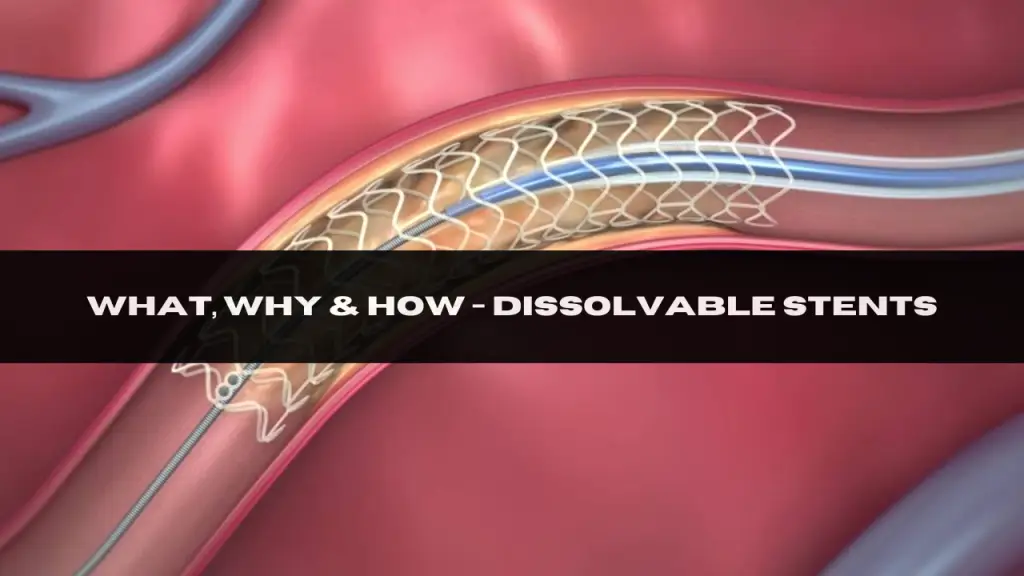
Stents, traditionally, are small mesh tubes used to prop open narrowed or blocked arteries, allowing for improved blood flow. Now, imagine a stent that serves its purpose and then gradually dissolves, leaving behind no permanent implant.
That’s the essence of dissolvable stents, also known as bioresorbable stents. These stents are typically made from materials such as polylactic acid or polyglycolic acid, which are gradually broken down by the body over time
The dissolving act is deliberate, aiming to provide the necessary support during the initial healing phase and then gracefully bow out, allowing the artery to resume its natural function.
Why Dissolvable Stents?
The answer lies in addressing certain drawbacks associated with traditional, permanent stents.
1. Temporary Support, Long-Term Gains:
Traditional stents, though highly effective, remain in the body permanently. Over time, this can lead to complications such as in-stent restenosis, where the treated artery narrows again.
Dissolvable stents offer temporary support during the critical healing period and then fade away, potentially reducing the risk of long-term complications.
2. Preserving Future Treatment Options:
Permanent stents can complicate future treatment options. If another blockage occurs, the presence of an existing stent can limit treatment choices.
With dissolvable stents, the artery returns to its natural state, providing flexibility for potential future interventions.
3. Reducing Inflammation and Clotting Risk:
The permanent presence of a metal stent can sometimes trigger inflammation or clotting.
Dissolvable stents, by virtue of their temporary nature, may minimize these risks, contributing to a smoother recovery process.
4. Facilitating Imaging Accuracy:
When imaging is required post-stent placement, dissolvable stents offer an advantage.
Unlike metal stents, they don’t interfere with imaging techniques like magnetic resonance imaging (MRI), providing clearer visuals for healthcare professionals.
How Do Dissolvable Stents Work?
1. Deployment:
Similar to traditional stents, it is guided through a catheter to the narrowed or blocked artery. Once in position, the stent is expanded, providing immediate support to the artery walls.
2. Healing Phase:
During the initial healing phase, the stent serves its purpose – preventing the artery from narrowing and promoting blood flow. The body, recognizing the stent as foreign material, starts breaking it down.
3. Gradual Breakdown:
The materials used in dissolvable stents are chosen for their bioresorbable properties. As the body’s enzymes start breaking down the stent, it gradually transforms into byproducts like carbon dioxide and water
4. Natural Restoration:
As the stent dissolves, the artery undergoes a natural restoration process. The vessel regains its flexibility, and the risk of complications associated with permanent stents is minimized.
5. Monitoring and Follow-Up:
Post-stent placement, monitoring and follow-up become integral. Healthcare professionals keep a close eye on the patient’s progress, ensuring that the artery heals effectively and functions optimally.
The Future of Cardiovascular Intervention.
Dissolvable stents represent a promising step forward in the realm of cardiovascular intervention. However, like any medical innovation, they are not without considerations.
Considerations and Challenges.
1. Timing of Dissolution.
The rate at which a stent dissolves is a critical factor. Too slow, and it may not provide sufficient support during the healing phase; too fast, and complications may arise.
2. Patient Selection:
Identifying the most suitable candidates for dissolvable stents is crucial. Factors such as the severity of the blockage, the patient’s overall health, and the specific characteristics of the affected artery play a role in determining the appropriateness of this intervention.
3. Long-Term Efficacy:
The long-term efficacy of dissolvable stents is a subject of ongoing investigation. Ensuring that they not only match but potentially surpass the performance of permanent stents is a key consideration for their widespread adoption.
4. Technological Advancements:
Continued technological advancements in stent design and materials are expected. These innovations aim to enhance the mechanical properties of dissolvable stents, ensuring optimal support during the healing phase and minimizing the risk of complications.
In Conclusion:
Dissolvable stents represent a remarkable leap forward in cardiovascular care, offering a temporary solution with potential long-term benefits.
As research and technological advancements continue, their role in treating coronary artery disease may evolve, providing healthcare professionals and patients with a valuable alternative.
As with any medical intervention, the decision to use dissolvable stents involves careful consideration of individual factors and a collaborative approach between patients and healthcare providers.
Through ongoing research, technological refinement, and a commitment to patient-centered care, dissolvable stents have the potential to redefine the landscape of cardiovascular intervention.