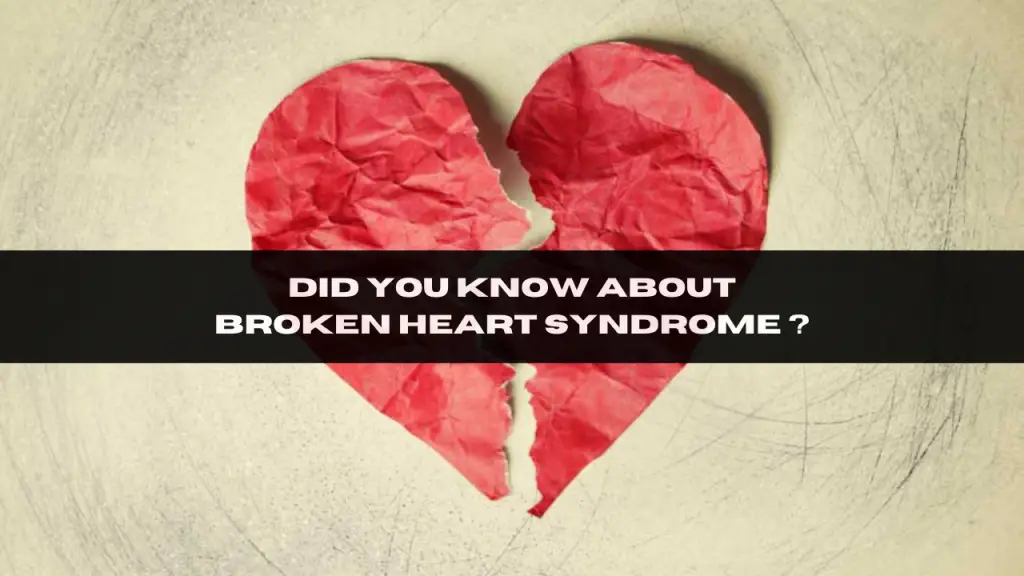
We’re delving into a topic that might sound like a plotline from a romantic drama, but it’s far more real and tangible than you might think. We’re talking about “Broken Heart Syndrome.”
Yes, you heard it right – our hearts can literally break, not just metaphorically. Let’s explore this fascinating yet concerning phenomenon that goes beyond the realms of love stories.
What is Broken Heart Syndrome, Anyway?
Broken Heart Syndrome, scientifically known as Takotsubo Cardiomyopathy, is a condition where the heart experiences sudden and intense contractions, resembling the shape of a Japanese octopus trap, or “takotsubo” in Japanese.
Unlike a heart attack, which is usually triggered by a blocked artery, Broken Heart Syndrome is often linked to an extreme emotional or physical stressor.
So, picture this: you just went through a tough breakup, received shocking news, or faced a highly stressful situation. Your heart, in response to this emotional upheaval, starts acting up – not the way you’d expect, right?
The Emotional Fallout
We’ve all heard the phrase “love hurts,” but who would have thought it could hurt in such a literal sense? Broken Heart Syndrome often follows moments of intense emotional stress, be it from grief, anger, fear, or surprise. It’s like our emotions have a direct hotline to our heart, and sometimes, that connection can go haywire.
Think of it as your heart throwing a tantrum in response to life’s emotional rollercoasters. “You broke up with me? Fine, I’ll show you!” – and there goes your heart, deciding to act out.
Interestingly it can feel like a Heart attack
One of the intriguing aspects of Broken Heart Syndrome is that its symptoms can closely mimic those of a heart attack. Chest pain, shortness of breath, and rapid heartbeat – all classic signs that something is awry with the ticker. This often leads people to rush to the emergency room, fearing the worst.
Stress Hormones
When we’re stressed, our bodies release a surge of hormones, including adrenaline. In Broken Heart Syndrome, this hormonal surge can temporarily stun the heart, causing its left ventricle to balloon. It’s like your heart is momentarily overwhelmed by the emotional storm, and its usual rhythm takes a backseat.
In simpler terms, it’s as if your heart is saying, “I can’t deal with this right now,” and decides to take a brief hiatus from its regular duties.
Who’s Vulnerable to a Broken Heart?
Contrary to popular belief, Broken Heart Syndrome isn’t exclusive to those navigating the tumultuous waters of romantic relationships. It can happen to anyone, at any age, and any gender. Yes, men, you’re not immune to the heartbreak – both figuratively and literally.
Whether you’re dealing with the loss of a loved one, a financial crisis, or even a surprise party that’s more shocking than delightful, your heart might decide it’s time for a temporary meltdown.
The Good News: Recovery
Now, before you swear off emotions altogether, here’s the silver lining: Broken Heart Syndrome is often reversible, and the heart can bounce back to its normal self with proper care and time. Unlike a true heart attack, there’s usually no long-term damage to the heart muscle.
It’s like your heart’s way of saying, “I needed a moment, but I’m back and better than ever.” So, while the emotional scars might linger, your heart is resilient and can heal.
Preventing Heartbreaks, Literally
So, how do we protect our hearts from such melodramatic episodes? Well, the first step is acknowledging the impact of stress on our health. Taking care of our mental well-being is as crucial as maintaining our physical health.
Whether it’s through meditation, exercise, or indulging in a good old belly laugh with friends, finding ways to manage stress is like giving your heart a shield against potential emotional turbulence.
Conclusion: Handle with Care
While Broken Heart Syndrome might sound like a peculiar twist in this narrative, it’s a reminder that our emotional and physical well-being are intricately connected.
So, as you navigate the unpredictable journey of life, handle your heart with care. It’s not just a metaphor; it’s a physiological truth. After all, our hearts deserve a standing ovation for the remarkable job they do, drama and all.